Introduction
You've done your homework. You've analyzed the matchup, studied the injury reports, and compared the offensive and defensive rankings. But there's one critical factor that most bettors completely overlook—the referee crew assigned to the game.
Every Sunday, a small group of officials takes the field with the power to fundamentally alter how a game unfolds. Their tendencies, philosophies, and even their personalities can influence everything from total points scored to penalty yards assessed. And yet, the vast majority of bettors never give the referee assignment a second thought.
That's a costly mistake.
NFL referee betting trends represent one of the last inefficiencies in a betting market that gets sharper every season. While sportsbooks have become increasingly sophisticated at setting lines based on team performance, weather, and public perception, officiating crew tendencies remain an underutilized edge for those willing to dig into the data.
In this comprehensive guide, we'll pull back the curtain on how specific referee assignments dramatically influence game outcomes and point spreads. You'll learn how to find reliable officiating data, which statistics actually matter, and how to incorporate this analysis into your betting process. Whether you're betting sides, totals, or player props, understanding NFL referee trends can give you the edge you've been looking for.
What Are NFL Referee Betting Trends?
NFL referee betting trends are statistical patterns that emerge from tracking how games officiated by specific crews tend to play out over time. These trends encompass a wide range of metrics, including average total points scored, penalty flags thrown, home team win rates, and how often games land over or under the posted total.
Each NFL game is assigned a seven-person officiating crew led by a referee (sometimes called the "white hat" due to their distinctive cap). The NFL Officiating department assigns these crews on a rotating basis, with assignments typically announced on Tuesday or Wednesday before game day. The league employs 17 referee crews, and each brings its own tendencies to the field.
The concept behind referee trend analysis is straightforward: officials are human beings with individual interpretations of the rulebook, varying levels of experience, and different philosophies about game management. Some crews call games tightly, flagging every marginal infraction. Others prefer to "let them play," reserving flags for only the most obvious violations. These tendencies create predictable patterns that savvy bettors can exploit.
Key Metrics to Track
When analyzing referee betting trends, several statistics prove most valuable:
Points Per Game Average: This measures the combined scoring in games officiated by a specific crew. Some referees consistently see higher-scoring games due to fewer defensive penalties called or a reluctance to throw flags on pass interference.
Over/Under Percentage: Perhaps the most actionable metric, this tracks how often games go over the posted total with each crew. A referee with a 60% over rate across 50+ games represents a significant trend.
Penalty Flags Per Game: Crews that throw more flags tend to extend drives through defensive penalties, often leading to higher scores. Conversely, flag-happy crews can also slow games down through constant stoppages.
Home Team Cover Rate: Some crews historically favor home teams through subjective calls, while others show no bias whatsoever.
Average Scoring Margin: This helps identify whether a crew tends to officiate closer or more lopsided games, useful for spread betting.
Why Referee Trends Matter for NFL Betting
Understanding referee trends matters because officiating directly impacts the fundamental variables that determine betting outcomes. This isn't speculation or superstition—it's a logical extension of how NFL games are actually played and called.
Consider how a single penalty can swing a game. A defensive pass interference call in the end zone awards the offense the ball at the one-yard line, virtually guaranteeing points. A roughing the passer flag on third down extends a drive that would otherwise end. A holding call negates a 40-yard touchdown run. These moments happen in every game, and the crews making these calls have demonstrably different thresholds for what constitutes a foul.
The impact on totals betting is particularly pronounced. According to historical data tracked by Pro Football Reference, the difference between the highest and lowest-scoring referee crews in a given season can exceed four points per game. When you're betting a total set at 44.5, knowing that the assigned crew averages 47.2 points per game provides meaningful context that the betting line may not fully reflect.
| Factor | High-Scoring Crews | Low-Scoring Crews |
|---|---|---|
| Flags Per Game | 12-15 average | 8-11 average |
| Defensive PI Calls | More frequent | Less frequent |
| Game Flow | More stoppages, longer drives | Fewer interruptions |
| Typical Total Impact | +2 to +4 points | -2 to -3 points |
| Best Bet Type | Overs, passing props | Unders, defensive props |
The Market Inefficiency Opportunity
Sportsbooks are remarkably efficient at pricing NFL games. They account for injuries, weather, rest advantages, travel, and countless other factors. But referee assignments present a unique challenge for oddsmakers.
First, assignments are announced mid-week, after opening lines have already been set and heavily bet. While books can and do adjust lines based on referee data, they must balance this against the action they've already taken. This creates opportunities for bettors who act quickly after assignments are announced.
Second, the general betting public largely ignores referee trends. This means sharp money that accounts for officiating data isn't counterbalanced by opposing recreational action. When a high-scoring crew is assigned to a game with a tight total, the smart money pushes the over without significant resistance.
Third, the sample sizes involved make it difficult for books to price crews perfectly. A referee might work 16-18 regular season games, providing limited data compared to the hundreds of data points available for team performance. This uncertainty creates value for bettors who properly weight referee trends against other factors.
Referee tendencies are one of the few remaining edges in NFL betting. The books know they matter, but the data is noisy enough that they can't price it perfectly. That gap is where sharp bettors make money.
How to Research and Analyze NFL Referee Trends
Incorporating referee analysis into your betting process requires reliable data sources, proper methodology, and an understanding of how to weight this information alongside other factors. Here's a systematic approach to researching NFL referee trends effectively.
-
Check the NFL's official website or sports news outlets on Tuesday/Wednesday. Assignments for the upcoming week are typically released mid-week.
-
Use dedicated tracking sites like Football Zebras, Pro Football Reference, or subscription services that compile referee statistics across multiple seasons.
-
Focus on points per game, over/under percentage, and flags per game for the specific crew. Use at least 12-16 games for meaningful sample sizes.
-
If a crew averages 48.3 points per game and the total is set at 43.5, that's a notable discrepancy worth investigating further.
-
A high-scoring crew matters more in a game between pass-heavy teams than between run-first, defensive squads. Weight the trend accordingly.
-
If a crew has new members or a different referee than previous seasons, historical data becomes less reliable.
-
Referee data should confirm or challenge your existing lean, not serve as the sole basis for a bet.
Where to Find Referee Data
Several resources provide the officiating statistics you need:
Football Zebras is the premier destination for NFL officiating news and analysis. They track crew assignments, provide historical performance data, and offer insights into rule interpretations and officiating trends.
Pro Football Reference includes officiating data within their game logs, allowing you to filter by referee and calculate custom statistics. Their database goes back decades, though recent seasons are most relevant.
Subscription handicapping services often include proprietary referee databases with betting-specific metrics like ATS records and over/under percentages already calculated.
NFL Operations provides official information about referee crews and their members, useful for understanding crew composition changes.
Sample Size Considerations
One of the biggest mistakes bettors make with referee trends is overreacting to small samples. A referee whose games have gone over in 7 of 8 outings sounds compelling, but eight games is statistically meaningless. Variance alone can produce such streaks.
For reliable trend data, look for patterns across at least 30-40 games, ideally spanning multiple seasons. Even then, recognize that officiating styles can evolve as rules change and crews gain experience. Weight recent seasons more heavily than older data, but don't ignore the larger sample entirely.
When dealing with newer referees or recently reshuffled crews, acknowledge the uncertainty. A crew with limited history requires more caution—the trend might be real, but you can't bet it with the same confidence as a well-established pattern.
Common Mistakes Bettors Make with Referee Trends
Referee trend analysis can provide a genuine edge, but only when applied correctly. Many bettors who discover this angle make critical errors that undermine its value or, worse, lead to losing bets. Here are the most common pitfalls and how to avoid them.
- Referee data adds a layer of analysis most bettors ignore
- Trends can confirm or challenge existing handicapping conclusions
- Historical patterns often persist due to individual officiating philosophies
- Information is publicly available and free to access
- Small sample sizes make many trends statistically unreliable
- Crew compositions change, invalidating historical data
- Overweighting referee data leads to ignoring more important factors
- Market efficiency means obvious trends are often already priced in
Mistake #1: Treating Referee Trends as the Primary Factor
The most damaging error is elevating referee data above more predictive factors. A crew's tendency to officiate high-scoring games matters far less than the actual offensive and defensive capabilities of the teams playing. If two elite defenses are facing off in poor weather conditions, a "high-scoring" referee crew isn't going to magically produce a shootout.
Referee trends should serve as a tiebreaker or confidence booster, not the foundation of your handicapping. They work best when they align with your existing analysis—confirming a lean toward the over in a game you already expected to be high-scoring, for example.
Mistake #2: Ignoring Crew Composition Changes
NFL officiating crews aren't static. Members retire, get promoted, or move between crews. A crew that was penalty-happy three years ago might officiate entirely differently today with new personnel.
Always verify that the current crew composition matches the data you're analyzing. If the referee (crew chief) has changed, historical crew data becomes largely irrelevant. Focus on the individual referee's career tendencies rather than outdated crew statistics.
Mistake #3: Chasing Short-Term Streaks
A referee whose last five games have gone under doesn't have a "cold streak"—they have normal variance. Bettors who chase these short-term patterns are essentially flipping coins while convincing themselves they've found an edge.
Look for sustained, multi-season patterns that suggest a genuine philosophical approach to officiating. A referee who has averaged 2.3 more points per game than league average across 60 games is showing you something real. One who's gone over in four straight is showing you randomness.
Mistake #4: Failing to Consider Matchup Context
Referee tendencies interact with the specific teams playing. A crew known for calling lots of defensive pass interference penalties will have more impact on a game featuring aggressive cornerbacks against elite receivers than one between two run-heavy teams.
Similarly, a penalty-heavy crew matters more in a close matchup where a few calls could swing the outcome. In a game between a 10-2 team and a 3-9 team, the better team is likely to win regardless of officiating.
Mistake #5: Not Accounting for Line Movement
By the time you discover that a high-scoring crew has been assigned to a game, sharps may have already moved the total. If a line opened at 44 and is now sitting at 46.5, the value may already be gone.
Check where lines opened and how they've moved since the referee assignment was announced. If the market has already adjusted, you're not getting an edge—you're getting a price that already reflects the information.
Best Practices for Using Referee Data in Your Betting
To extract maximum value from referee trend analysis while avoiding the pitfalls, follow these expert-level best practices. These recommendations come from professional bettors who have successfully incorporated officiating data into profitable NFL betting systems.
Build a Personal Database
Rather than relying solely on third-party sources, create your own tracking system for referee statistics. This allows you to calculate the specific metrics most relevant to your betting style and ensures you're working with accurate, up-to-date information.
Track at minimum: total points, over/under results against closing lines, total penalties, and penalties by type (especially pass interference and roughing the passer). Over time, patterns will emerge that you can exploit with confidence.
Weight Recent Data Appropriately
Officiating styles evolve as rules change and the league emphasizes different points of emphasis each season. A referee's tendencies from five years ago matter less than their recent performance.
Use a weighted system: current season data gets full weight, last season gets 75%, two seasons ago gets 50%, and anything older serves only as background context. This captures both the long-term patterns and recent adjustments.
Focus on Extreme Outliers
The biggest edges come from referees at the extremes of the distribution. A crew that's exactly average provides no actionable information—they officiate games like, well, average games.
Target crews in the top or bottom 20% for your chosen metrics. If the league average is 46 points per game and your referee averages 49.5, that's a meaningful deviation worth betting. A referee averaging 46.3 is statistical noise.
Combine Multiple Correlated Factors
The strongest betting positions emerge when multiple factors point in the same direction. A high-scoring referee assigned to a dome game between two pass-happy teams with weak secondaries creates a powerful confluence for the over.
Conversely, be cautious when factors conflict. That same high-scoring crew assigned to an outdoor December game between defensive teams in windy conditions doesn't guarantee an over—the environmental and matchup factors may overwhelm the officiating tendency.
-
Sharp money moves fast. Check assignments Tuesday/Wednesday and place bets before lines adjust significantly.
-
A referee's over/under record against closing lines is more predictive than against openers, as closing lines are more efficient.
-
If a high-scoring crew adds theoretical value to the over, treat a 44.5 total as if it were 44 in your analysis.
-
Keep records of bets where referee data influenced your decision. Review quarterly to see if the edge is real for your approach.
-
Playoff crews are selected for excellence and may officiate differently under heightened pressure. Treat playoff data distinctly.
-
Some weeks, no referee assignment provides meaningful value. Accept this and focus on games where other edges exist.
Specific Applications by Bet Type
Totals Betting: This is where referee trends shine brightest. Focus on points per game averages and over/under percentages. High-scoring crews assigned to games with totals below their average represent the clearest opportunities.
Spread Betting: Home team cover rates can provide modest edges, but be cautious—home field advantage has declined league-wide, and referee bias is less pronounced than in previous eras.
Player Props: Penalty-heavy crews create opportunities for receiver props (more offensive opportunities) and defensive props (fewer chances to accumulate tackles). A crew that frequently calls pass interference benefits receivers in contested-catch situations.
First Half/Second Half: Some crews call games more loosely as they progress, while others tighten up. If you have granular data on when penalties are called, this can inform half-specific bets.
Live Betting: Watch how the assigned crew is officiating in real-time. If a historically flag-happy crew is letting teams play through the first quarter, live unders may present value as the market hasn't adjusted.
NFL Referee Trends: Frequently Asked Questions
Advanced Strategies: Taking Referee Analysis Further
Once you've mastered the fundamentals of referee trend analysis, several advanced strategies can help you extract even more value from this underutilized angle. These approaches require more sophisticated data tracking and analysis but can yield meaningful edges for dedicated bettors.
Situational Referee Tendencies
Just as teams perform differently in various situations, referees may officiate differently based on game context. Some advanced questions to investigate:
Primetime Games: Do certain referees call tighter or looser games under the national spotlight? The pressure of Sunday Night Football or Monday Night Football might influence officiating behavior.
Division Rivalries: In heated matchups with history, some crews may throw more flags to maintain control, while others let the physicality play out.
Weather Conditions: How do crews adjust when rain, snow, or wind impacts play? Some referees may give more leeway for incidental contact in adverse conditions.
Blowouts vs. Close Games: Does a crew's flag frequency change when games become lopsided? Some referees may swallow whistles to avoid extending one-sided affairs.
Tracking these situational tendencies requires detailed game logs and manual coding, but the insights can differentiate your analysis from bettors using only aggregate statistics.
Crew Member Analysis
While the referee (crew chief) receives most attention, other crew members influence outcomes. The side judge and field judge, for instance, are primarily responsible for pass interference calls in their zones. If a historically conservative referee has an aggressive side judge, downfield penalty rates might not match the referee's overall tendencies.
When crews change composition between seasons, analyze which members departed and arrived. A new side judge might fundamentally alter a crew's pass interference calling rate, making last season's data misleading.
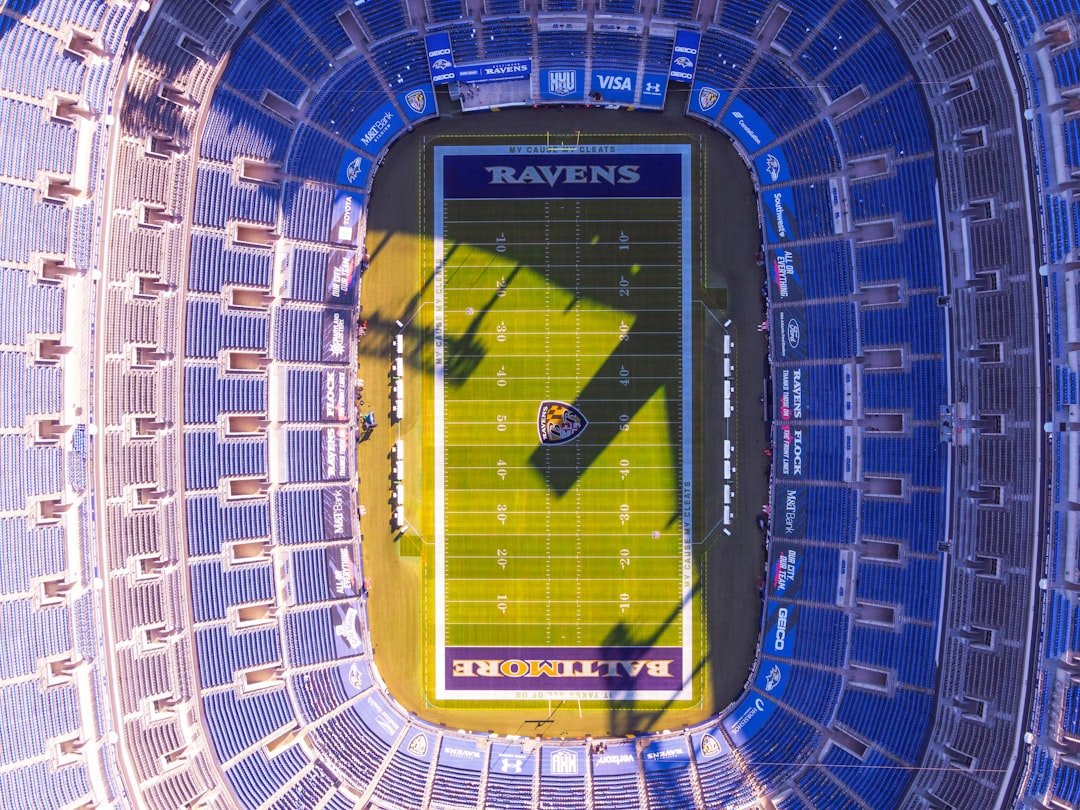
Photo by Brendan Beale on Unsplash
Regression Modeling
For bettors comfortable with statistics, building regression models that include referee variables can quantify their impact more precisely. A basic approach:
- Collect game-level data including teams, location, weather, totals, and results
- Add referee crew as a categorical variable
- Run regressions predicting total points, with and without the referee variable
- Compare model fit to determine how much explanatory power officiating provides
This analysis typically shows that referee assignment explains 2-5% of variance in game totals—meaningful but secondary to team quality. The specific coefficient for each referee tells you their expected impact in points, which you can compare to the posted line.
Identifying Referee Biases
While the NFL strives for impartiality, referees are human. Academic research, including studies published through the MIT Sloan Sports Analytics Conference, has examined potential officiating biases related to home field, team quality, and even specific players.
Some patterns that have shown up in research:
Star Player Treatment: Elite quarterbacks may receive more roughing the passer calls. If a referee has historically given certain players favorable treatment, this could influence games and props.
Makeup Calls: After a controversial or missed call, some referees seem more likely to even things out with a subsequent call. This is nearly impossible to predict but worth monitoring in live betting.
Home Cooking: While overall home bias has declined, some referees maintain more pronounced home-team favor than others. Track home team ATS records by referee to identify outliers.
Creating Composite Scores
Rather than analyzing individual metrics separately, create a composite "referee profile" score that captures overall tendencies. Weight the factors most relevant to your betting style:
- 40%: Points per game relative to league average
- 25%: Over/under percentage against closing lines
- 20%: Penalties per game
- 15%: Home team cover rate
A single score makes it easier to quickly compare referee assignments across the week's slate and identify the strongest angles. Adjust the weightings based on your own research into which factors are most predictive.
Putting It All Together: A Weekly Workflow
Theory is useful, but execution wins bets. Here's a practical weekly workflow for incorporating referee trend analysis into your NFL handicapping process.
-
After each week's games conclude, log the results in your referee tracking system. Note total points, penalties, and any unusual officiating patterns you observed.
-
Check NFL.com, Football Zebras, and Twitter/X for referee assignment announcements. They typically drop Tuesday afternoon through Wednesday.
-
Cross-reference assignments against your database. Flag any games where the assigned crew represents a meaningful deviation from average (top/bottom 20% in key metrics).
-
For flagged games, conduct deeper research. Consider crew composition changes, situational factors, and how the referee tendency aligns with your existing handicapping.
-
If referee analysis confirms an edge, shop lines across multiple sportsbooks and place bets. Act before weekend line moves absorb the information.
-
Watch how assigned crews are officiating in real-time. If tendencies aren't playing out as expected, consider live betting adjustments.
Example Analysis Walkthrough
Let's walk through a hypothetical example to illustrate the process:
Step 1: Assignment Check On Tuesday, you see that Brad Allen's crew has been assigned to the Dolphins at Bills game.
Step 2: Database Review Your records show Brad Allen has averaged 48.7 points per game over his last 40 assignments, against a league average of 45.2. His games have gone over the posted total 58% of the time.
Step 3: Line Comparison The current total for Dolphins-Bills is 47.5. Allen's average is 1.2 points above this number.
Step 4: Matchup Context Both teams rank in the top 12 for offensive efficiency. The Bills' secondary has struggled with injuries. The game is in Buffalo's dome with no weather concerns.
Step 5: Integration You were already leaning over based on the offensive matchup. The referee assignment confirms your lean and adds confidence. Multiple factors align.
Step 6: Execution You shop lines, find Over 47 at one book, and place your bet Wednesday evening before the line potentially moves to 48.
This systematic approach ensures you're not overreacting to referee data alone while still capturing its value when conditions align.
Conclusion
NFL referee betting trends represent a genuine, if modest, edge in an increasingly efficient betting market. The officials who take the field each Sunday bring individual philosophies and tendencies that influence game outcomes in predictable ways. By understanding these patterns and incorporating them into a disciplined handicapping process, you can make sharper betting decisions than the average bettor who ignores officiating entirely.
But let's be clear about what referee analysis is and isn't. It's not a magic bullet that guarantees winning bets. It's not even the most important factor in handicapping NFL games—team quality, injuries, and matchup dynamics matter more. What it is, however, is an additional tool in your arsenal, one that can provide confirming evidence for bets you're already considering and occasionally reveal value that others miss.
The key principles to remember:
Respect sample sizes. Don't chase short-term streaks or overweight limited data. Look for sustained patterns across multiple seasons.
Focus on extremes. Average referees officiate average games. Your edge comes from crews at the statistical tails.
Integrate, don't isolate. Referee data works best when combined with strong fundamental analysis. Use it to confirm leans, not create them.
Act with urgency. Information has a shelf life. Once referee assignments are public, sharp money moves fast.
Track your results. The only way to know if referee analysis is working for you is to keep detailed records and review them honestly.
Start incorporating referee trends into your handicapping this week. Check the assignments when they're released, compare them to historical data, and see how they align with your existing opinions on each game. Over time, you'll develop an intuition for when officiating really matters and when it's just noise.
The bettors who consistently win are those who find edges others overlook. NFL referee trends won't make you rich on their own, but they're one more piece of the puzzle—and in sports betting, edges compound. Every small advantage you stack in your favor brings you closer to long-term profitability.
Ready to Sharpen Your NFL Betting Strategy?
Referee trends are just one piece of the puzzle. Explore our complete NFL betting guides to master spread analysis, totals betting, and bankroll management strategies that serious bettors use to stay profitable all season long.
Explore NFL Betting Guides
Comments
No comments yet. Be the first to comment!
Leave a Comment