To hedge a bet, you bet the other side of it so that you win something whichever way the game goes. The stake that locks in the same profit either way is your ticket's total payout divided by the decimal odds of the other side:
Hedge stake = payout / decimal odds of the hedge
A $50 futures ticket that now returns $800, hedged at -150 (decimal 1.667), needs $480 on the other side to lock in $270 whoever wins. That is the whole method. The rest of this page is when it is worth doing, the other two kinds of hedge (saving your stake, and middling a live line), and what a hedge costs you - because it always costs something.
The three hedges and their formulas
| Hedge | Stake on the other side | What you get |
|---|---|---|
| Lock the same profit | Payout / hedge decimal odds | The same profit whoever wins |
| Save your stake | Original stake / (hedge decimal odds - 1) | Break even if the hedge wins, most of the upside if yours does |
| Middle a moved line | About the same as your first bet, at the new number | Both bets win if the result lands between the two numbers |
Decimal odds from American odds: for a plus price, 1 + odds/100 (+300 is 4.0); for a minus price, 1 + 100/odds (-150 is 1.667). The cash out and hedge calculator takes American odds and does the conversion.
Hedging a futures bet
Futures are where hedging started: a long-odds ticket bought months ago, a team that got to the final, and a payout big enough to matter.
A $50 title ticket at +1500, team now in the final
| Ticket | $50 at +1500: returns $800 ($750 profit) |
|---|---|
| Final, moneyline | Your team +130, the other team -150 |
| Hedge stake | $800 / 1.667 = $480 on the other team at -150 |
| Your team wins | $800 - $480 hedge - $50 ticket = $270 profit |
| Other team wins | Hedge returns $800; $800 - $480 - $50 = $270 profit |
| Save-the-stake instead | $50 / 0.667 = $75 on the other team: $675 profit if yours wins, $0 if not |
Hedging locks in $270. Letting it ride is worth about $286 on average: the no-vig chance of your team is 42.0% (43.5% / 103.5%), and 42.0% x $750 - 58.0% x $50 = $286. The $16 difference is the vig paid on the $480 hedge.
Hedging the last leg of a parlay
A parlay with all but one leg won is a single bet on the last leg that pays the parlay's full return, so it hedges the same way. It is also the case where a hedge most often beats the book's cash out offer, because parlay cash out offers tend to carry a bigger cut - see when to cash out a live bet for how to price the offer.
$100 three-leg parlay, two legs won
| Ticket | $100, returns $600 |
|---|---|
| Last leg, 4th quarter | Your team -400, the other side +300 (decimal 4.0) |
| Hedge stake | $600 / 4.0 = $150 on the other side |
| Your team wins | $600 - $150 - $100 = $350 profit |
| Other side wins | Hedge returns $600; $600 - $150 - $100 = $350 profit |
| The book's cash out offer | $410 back, a $310 profit |
The hedge locks in $40 more than cashing out - as long as a second book has the other side near +300 and you can place it before the line moves.
Middling a live line
Live betting creates a third kind of hedge. When a live line moves a long way from the number you bet, betting the other side at the new number leaves a window where both bets win - a middle - and costs little if the game lands outside it.
NBA totals move the most. Say you bet Over 221.5 pregame at -110. The first half is played at a fast pace and the live total climbs to 231.5. Bet Under 231.5 at -110 for the same stake:
Over 221.5 pregame, Under 231.5 live, $110 each at -110
| Final total 221 or fewer | Over loses $110, Under wins $100: -$10 |
|---|---|
| Final total 222 to 231 | Both win: +$200 |
| Final total 232 or more | Over wins $100, Under loses $110: -$10 |
You risk $10 to win $200. The middle only has to land about 1 time in 21 (10 / 210 = 4.8%) to break even, and a 10-point window in an NBA total lands far more often than that.
The catch is that the live total rarely gives you ten points for nothing - it moved because the pace and the shooting moved, and it is often right. The NBA live total calculator shows where the pace so far points, so you can see whether the live number has overshot. The same idea works on a live point spread that swings after a big run.
What a hedge costs you
A hedge is a second bet, and every bet pays the book's margin. So a hedge always returns a little less on average than letting the ticket ride - $16 in the futures example above. You are paying for certainty, the way you pay for insurance.
That is worth paying when:
- the swing matters to your bankroll. If the ticket's payout is a large share of everything you bet with, locking in part of it is sensible. Sizing your bets so this rarely happens is what the Kelly criterion is for.
- you would not bet the side you are holding at today's price. Holding a ticket is the same as betting its current value on it now. If you would not make that bet, hedging is consistent.
- you can get a better price than the market's. Shop the hedge across books; half a point or 10 cents of price is often the difference between a hedge that costs and one that is free.
And it is not worth paying when the payout is small next to your bankroll, or when the price on the other side is poor. Hedging every ticket out of nerves turns a winning bettor into a break-even one, one vig at a time.
Hedging step by step
-
Write down the ticket's total payout
Stake plus profit, as the bet slip shows it.
-
Find the best price on the other side
Check every book you have an account with - the hedge pays its vig, so the best price matters most here.
-
Convert that price to decimal odds
+130 is 2.30; -150 is 1.667.
-
Divide payout by decimal odds
That is the stake that locks the same profit both ways. For save-the-stake, divide your original stake by (decimal odds - 1) instead.
-
Compare it with the cash out offer and with letting it ride
The cash out calculator shows all three side by side.
-
Place it while the price is there
Live prices move between plays; a hedge priced at +300 that fills at +250 locks in less.
Questions
Further reading
Hedging is a pricing problem, and King Yao's Weighing the Odds in Sports Betting treats it as one - estimate the fair line, compare, act only on the gap. The rest of our reading list is in the best sports betting books.
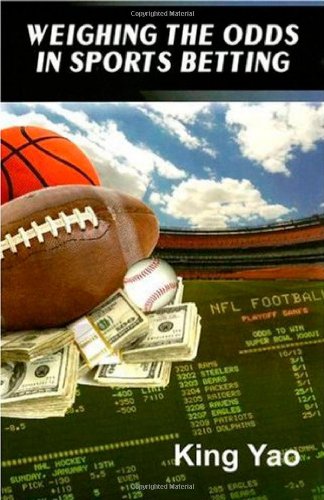
Weighing the Odds in Sports Betting
A trader's approach: estimate a fair line, compare it with the book's, and only bet the gap - with chapters on spreads, moneylines, totals, parlays, teasers and hedging.
Comments
No comments yet. Be the first to comment!
Leave a Comment